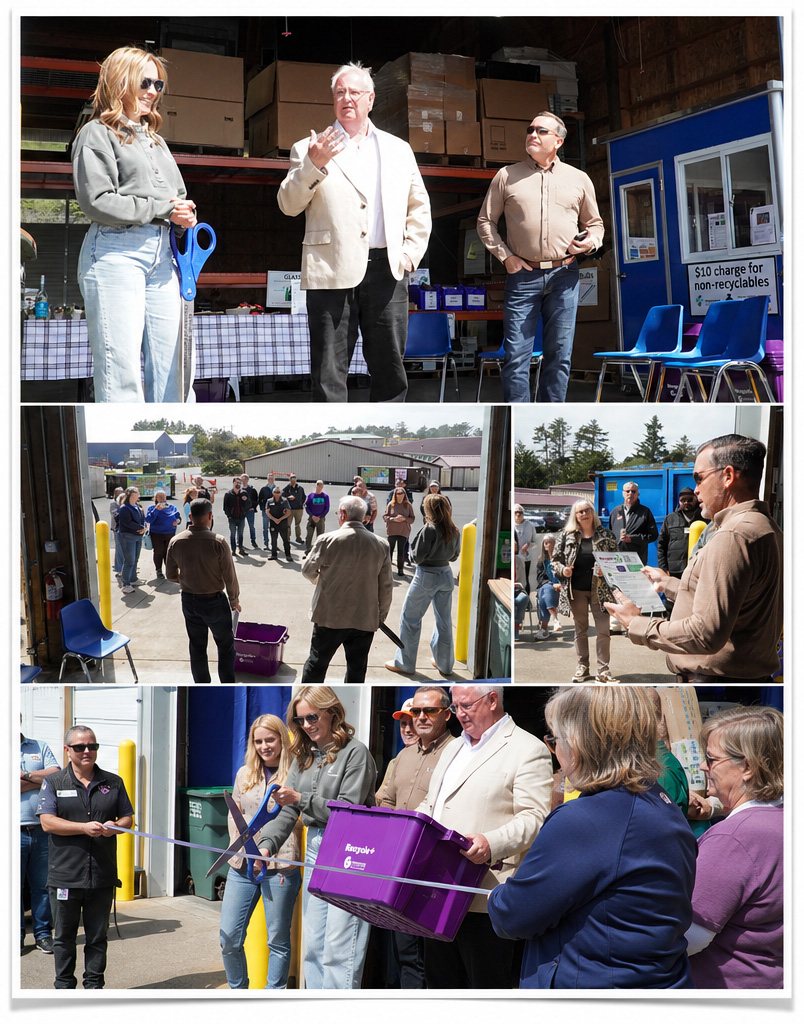
This week I had the opportunity to attend the ribbon cutting celebration for the new recycling improvements at Thompson’s Sanitary Service in Newport.
Events like this matter because recycling is changing significantly across Oregon through the state’s new Recycling Modernization Act (RMA). The law represents one of the largest updates to Oregon’s recycling system in decades and is designed to make recycling more reliable, easier to understand, and more effective statewide.
As a County Commissioner, I believe these conversations are important because rural communities like Lincoln County face unique challenges when it comes to waste management, transportation costs, environmental stewardship, and public education. Recycling systems only work well when the public understands how to participate correctly.
For many years, people were encouraged to recycle as much as possible. Unfortunately, “wish-cycling” — putting questionable items into recycling bins hoping they could be recycled — created major contamination problems. When contamination levels become too high, entire recycling loads can sometimes end up discarded.
Oregon’s Recycling Modernization Act is trying to solve that problem by:
- creating more consistent recycling standards statewide
- increasing accountability for manufacturers and recycling processors
- improving transparency and public trust
- helping fund transportation and recycling infrastructure for rural communities
- reducing contamination through better public education
One of the biggest lessons from the new system is simple:
The best recycler is not the person who recycles the most items — it is the person who recycles the correct items.
Some of the most important recycling habits include:
- flattening cardboard
- rinsing containers
- keeping recyclables loose (not bagged)
- avoiding food contamination
- learning which materials are locally accepted
- reducing and reusing before recycling whenever possible
The event also highlighted practical tools available to the public = the “Waste Wizard” feature available through Thompson’s Sanitary Service, which helps residents quickly determine what can and cannot be recycled. Tools like this help remove confusion and reduce contamination.
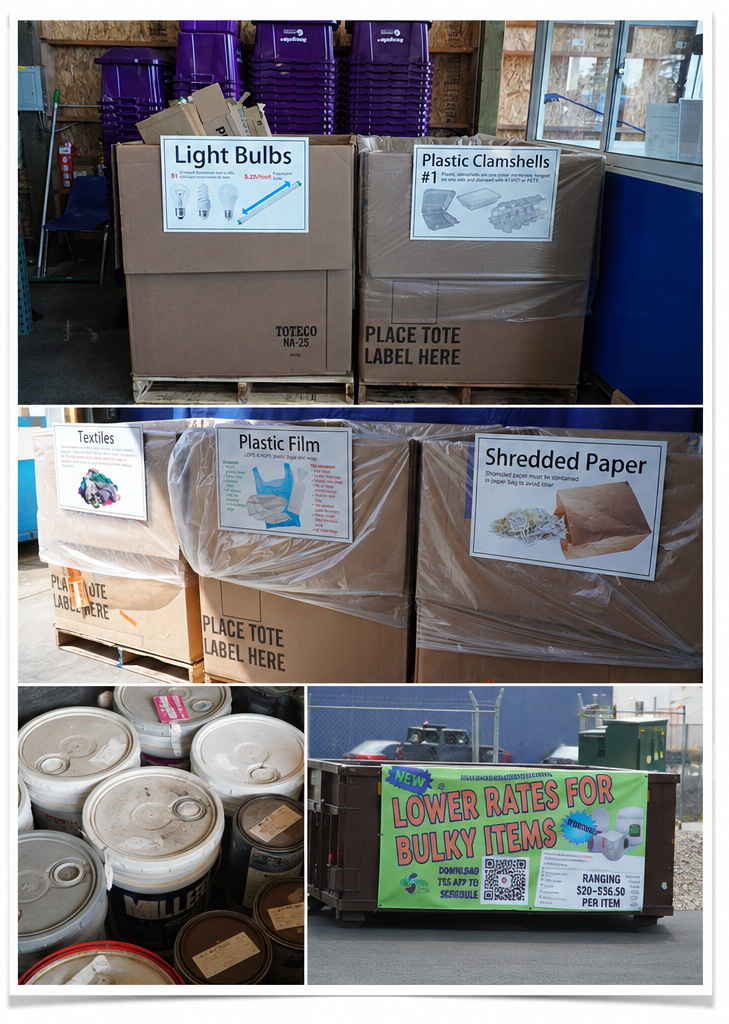
I was especially excited to learn that Thompson’s Sanitary has added several new recycling opportunities at their recycling depot, including:
- textiles such as cotton shirts, towels, and sheets
- plastic film and grocery bags
- shredded paper (contained properly in paper bags)
- certain plastic clamshell containers
- light bulb recycling
I want to thank the entire Thompson’s Sanitary team for their continued investment in recycling infrastructure and public education here on the Oregon coast. Their work helps support cleaner communities, environmental stewardship, and long-term sustainability for Lincoln County residents.
Good recycling is not just about throwing things away correctly — it is about building a culture of responsibility, stewardship, and community participation.
Thank you again to everyone who helped make the event possible.